HubSpot's customer harness, explained for small businesses
HubSpot's "customer harness" means the CRM is no longer the product. The value is in AI agents that find, follow up and look after customers, all working from one clean record of each person.
If you run a small service business, you don't have to wait for HubSpot to finish building it. You can set up the same thing now, on a simpler platform, for a flat monthly fee.
What happened at HubSpot
On 12 November 2026, co-founder Brian Halligan came back as HubSpot's CEO, replacing Yamini Rangan. He and co-founder Dharmesh Shah say they're re-founding the company. Halligan put it like this on X:
"I'm back as CEO of @HubSpot today. @dharmesh and I are completely re-founding the company. Its day 1. We're now the Customer Harness Company."
Brian Halligan, on X, 12 November 2026
HubSpot's announcement calls the next chapter "the customer relationship harness". CMSWire has the full story.
Halligan has said he'll set out his plans in the coming days. So far there's no new product, price or migration date. Nothing has changed for HubSpot customers yet.
What a "harness" is, in plain English
A harness is what lets AI agents do real work inside your business. It gives them three things:
Your customer data. Who each person is, what they've asked, what they've bought.
The tools to act. Send the reply, book the call, take the payment, update the record.
The rules. What the agents are allowed to do, and when a person takes over.
The CRM becomes the record underneath. The agents on top do the prospecting, the follow-up and the service.
Halligan is right about where this is going
I think he's called it correctly. Most small businesses I speak to don't lose sales because the offer is weak. They lose them in the gaps between steps: the enquiry answered two days late, the follow-up nobody sent, the past client nobody invited back.
Agents working from one record close those gaps. Speed of reply decides more bookings than the brochure does, and an agent replies in a minute at 11pm on a Sunday.
What it looks like in a small business
Take a retreat company or a coaching business with a small team:
Someone fills in a form at 11pm. An agent replies within a minute, answers their questions from your own FAQs and offers a call.
They book the call. Reminders go out by email and text. If they don't show, a follow-up goes the next morning.
They don't buy yet. They get useful emails for weeks, not one "just checking in".
They buy. Onboarding, payment reminders and the review request all run without anyone chasing.
A year later, past clients hear about the next thing first.
It all runs from one record of each person. You step in for the conversations that need you.
Why I moved off HubSpot
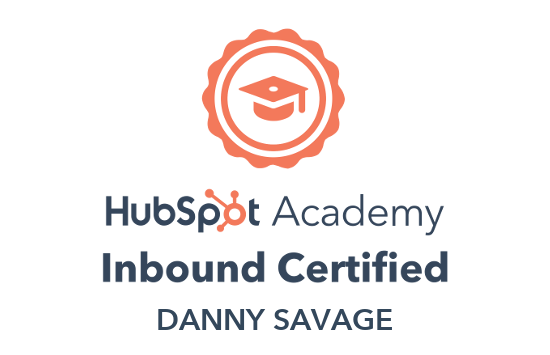
I've used HubSpot across three businesses, and I earned HubSpot Academy's Inbound certification in 2019. I rate it, and it did the job. What changed was the size of our email list: as it grew, so did the bill, until we were priced out.
So we moved everything into GoHighLevel: the CRM, email, forms, bookings and payments. It was cheaper, easier to run, and everything sat in one place instead of being spread across tools.
You can build it now, without waiting
HubSpot is a strong platform. If you're a larger team already built around it, wait and see what Halligan ships.
If you're a founder with a small team, there's a simpler route. GoHighLevel puts the CRM, forms, calendars, email, text messages, payments and AI agents in one place. Its Conversation AI answers enquiries across your channels, its Voice AI can pick up the phone, and workflows run the follow-up. You pay a flat monthly fee for the platform, not a fee for every person on your team.
The software isn't the hard part. The hard part is deciding what each step should say and do, then wiring it together so it actually runs. That's where most people stall.
What I'd do this month if you're on HubSpot and unsure
Don't rush a migration. Nothing has changed yet, and moving platforms in a panic costs more than waiting a few weeks.
Find where enquiries go quiet. Write down every step from first enquiry to paid client, and mark the ones where people drop off.
Clean your data. One record per person, no duplicates. Any harness, HubSpot's or anyone else's, is only as good as the record underneath.
Decide: wait or build. Wait for HubSpot's version, or put agents on those quiet steps now on a platform you can afford to run.
Where we come in
At The Product Ladder we build this for founder-led businesses, done for you: the enquiry form, the agent that replies, the follow-up, the booking, the payment and the welcome, all on one record.
If you're not sure where your enquiries go quiet, the Product Ladder scorecard shows you in a few minutes. If you'd rather talk it through, book a 30-minute audit call.
Questions people ask
What is HubSpot's customer harness?
It's HubSpot's new direction under Brian Halligan. The CRM becomes the record underneath, and AI agents that prospect, follow up and serve customers do the work on top of it. HubSpot hasn't announced a finished product or a date yet.
Is Brian Halligan back as CEO of HubSpot?
Yes. He returned as CEO on 12 November 2026, replacing Yamini Rangan. He co-founded HubSpot with Dharmesh Shah in 2005.
Do I need to leave HubSpot?
No. Nothing has changed for customers yet. If you're a small team paying for features you don't use, it's a good moment to look at what you actually need.
What's the difference between a CRM and a customer harness?
A CRM stores your customer records. A harness lets AI agents use those records to act: reply, book, follow up and update the record, within rules you set.
Is GoHighLevel a good HubSpot alternative for a small business?
For a small service business that wants enquiries answered fast, bookings and follow-up automated and payments in one place, yes. It costs a flat monthly fee rather than per user. Larger sales teams with complex reporting may still be better served by HubSpot.